
Embedded Challenge Systems Refining Core Spin Processes in Casino Applications
Embedded challenge systems connect directly to basic reel spin operations in casino applications through progressive task structures that activate alongside each rotation, and these layers modify payout triggers, multiplier applications, and symbol combinations without replacing the fundamental random number generator cycles. Data from industry reports indicate that such integrations occur in over 60 percent of new digital slot releases tracked through 2026, while platform analytics reveal extended session durations when challenges align with spin sequences rather than appearing as separate menus.
Mechanics of Integration
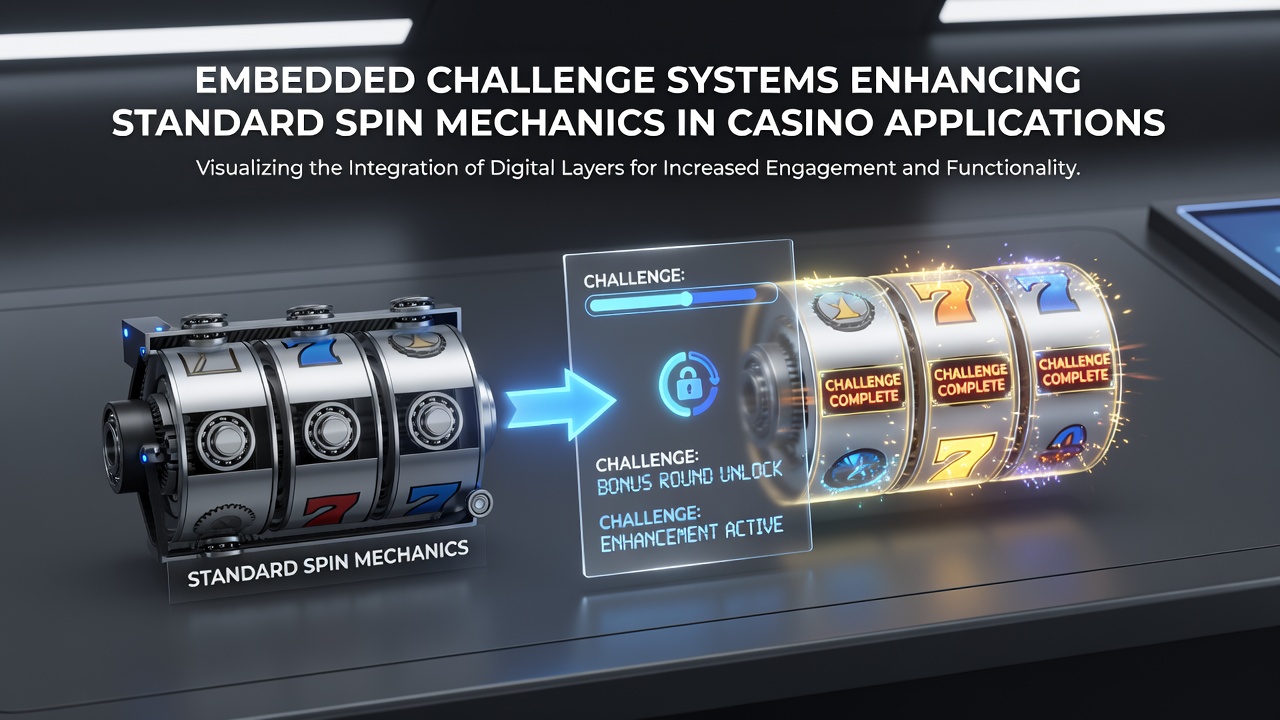
Standard spin mechanics rely on independent reel outcomes determined per activation, yet embedded challenges overlay objectives such as consecutive symbol matches or cumulative win thresholds that build across multiple spins, and this overlay adjusts bonus round entry points by linking spin results to task completion meters. Researchers at gaming technology firms have documented how these systems use real-time tracking to escalate difficulty levels based on spin history, which in turn influences reel weighting distributions during active challenge phases without altering base game probabilities outside those windows.
Task Activation During Spins
Challenge elements trigger on specific spin outcomes, for instance when a wild symbol lands in designated positions it advances a progress bar toward a secondary objective like collecting themed items, and this process feeds back into the core mechanics by unlocking enhanced reel features such as stacked symbols or expanding wilds on subsequent spins. Observers note that the connection remains seamless because the challenge logic runs parallel to the primary RNG engine rather than interrupting it, which allows players to maintain continuous reel engagement while accumulating task rewards.
Enhancements to Spin Dynamics
Standard spins gain additional layers when challenges introduce conditional modifiers that apply only after certain spin thresholds are met, and studies from European gaming labs show these modifiers can increase average return-to-player visibility during active challenge periods by adjusting display elements like near-miss frequencies. The ball's in the developer's court when designing these connections, because the challenge must reference spin data without creating predictable patterns that could influence regulatory compliance checks.
One documented approach involves sequential challenges where each completed spin-based task unlocks a new reel modifier, such as adding extra paylines or altering symbol frequencies temporarily, while the base spin cycle continues uninterrupted. Figures from platform providers reveal that these sequential structures correlate with higher spin volumes per session in regions where operators report aggregated data, though exact percentages vary by jurisdiction.
Regional Implementation Patterns
North American operators have incorporated challenge systems that tie spin streaks to loyalty point multipliers, whereas Australian regulatory frameworks emphasize transparent display of challenge progress during every reel activation, and both approaches demonstrate how the same core integration adapts to local oversight requirements. Data indicates that challenge completion rates rise when systems display real-time spin contributions directly on the reel interface instead of in secondary windows.
Turns out the technical architecture often employs event listeners attached to the spin outcome handler, which allows challenge scripts to read results and apply updates within the same game loop, and this method avoids latency issues that could disrupt standard spin timing. Experts have observed that such tight coupling supports smoother transitions between base spins and challenge-enhanced sequences across mobile and desktop casino applications.
September 2026 Trends
By September 2026 platform updates had introduced challenge tiers that scale with player spin frequency, linking higher volumes to progressively complex objectives such as pattern matching across multiple reel sets, and aggregated reports from technology vendors show these updates appearing in applications serving multiple international markets simultaneously. The writing's on the wall for further refinements, since ongoing data collection continues to map how spin mechanics respond to challenge feedback loops in live environments.
Technical Considerations
Developers maintain separation between the RNG core and challenge logic through modular code structures, which permits independent auditing of spin fairness while challenge systems operate on derived data streams, and this separation aligns with standards from bodies like the Nevada Gaming Control Board. Nevada Gaming Control Board guidelines address such layered systems by requiring clear documentation of how challenge progress affects displayed outcomes without modifying underlying probabilities.
Conclusion
Embedded challenge systems enhance standard spin mechanics by creating parallel progression paths that reference and respond to reel results in real time, and the resulting architecture supports extended interactions while preserving teh integrity of each individual spin cycle. Evidence from multiple regulatory regions and technology analyses confirms that these integrations have become standard features in contemporary casino applications, with ongoing adaptations expected as data collection methods evolve through late 2026. American Gaming Association reports continue to track adoption rates across operator portfolios, providing benchmarks for how challenge layers influence overall spin engagement metrics.